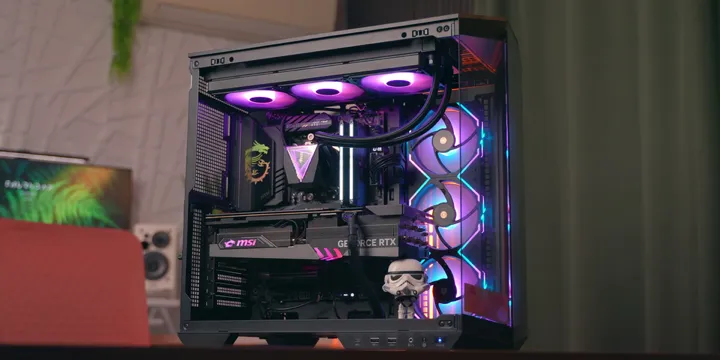
PC (Personal Computer)
Personal computers running Windows, macOS, or Linux that play games through digital distribution platforms like Steam, Epic Games Store, and others. MOD support and affordable pricing define the PC gaming experience.

RANKINGTop 10 best-selling games
How it is ranked: Worldwide sales (from the English Wikipedia list)
PUBG: BATTLEGROUNDSMinecraftTerrariaStardew ValleyGarry's ModEuro Truck Simulator 2PhasmophobiaDiablo IIIMeccha ChameleonRustWhat is PC gaming?
PC gaming refers to playing games on personal computers using various operating systems: Windows dominates, but macOS and Linux support thriving gaming communities. Unlike dedicated gaming consoles, PCs serve multiple purposes—work, communication, entertainment. This flexibility is PC gaming's defining feature. Players can upgrade components individually, customizing their hardware to specific needs. A budget machine plays indie games and older titles, while a high-end system renders cutting-edge graphics at extreme settings.
The history of PC gaming traces back to the 1970s, when home computer enthusiasts shared simple games through magazine listings and bulletin boards. IBM PC's introduction in 1981 accelerated adoption. By the 1990s, titles like Doom and StarCraft established PC gaming as a legitimate market segment. When Valve launched Steam in 2002, the landscape transformed. Digital distribution eliminated manufacturing costs and retail markups, allowing smaller developers to reach global audiences. This democratization of game distribution created an explosion of diverse games.
The digital revolution
Steam's 2002 launch fundamentally changed PC gaming economics. Before Steam, games shipped as physical boxes—an expensive proposition that limited publisher risk. Only companies with sufficient capital could distribute retail games. Steam eliminated these barriers. Any developer could publish directly to millions of potential customers. This enabled indie gaming to flourish: one-person teams could release games and reach audiences comparable to major publishers. Games that never would have received retail shelf space found devoted audiences online.
The shift to digital distribution also enabled competitive pricing. Steam frequently hosts sales offering 50-75% discounts on major titles. This aggressive pricing eroded game value perceptions across the industry, though it also increased total player bases. Simultaneously, MOD tools became standard inclusions, letting players extend games indefinitely. Games like Skyrim and GTA V gained additional lifespans through player-created content. However, PC gaming also attracted piracy and cheating problems absent from console gaming. The relative openness that enabled freedom also created security challenges.
Regional PC gaming culture
PC gaming's global footprint is uneven. In Japan, console gaming dominates; PC gaming remains niche. South Korea and China tell different stories. Korea's PC gaming culture was molded by government computing policies, Blizzard's dominance with StarCraft, and the rapid spread of internet cafes (PC "bangs"). Within two decades, Korea established esports around PC games as a legitimate profession. PC gaming represents roughly one-third of Korea's total gaming market.
China presents another model. Console gaming faced regulatory obstacles, prompting gamers to focus on PC titles instead. Chinese developers created massive audiences around games like World of Warcraft and League of Legends. PC gaming claims approximately 30% of China's gaming market. Western markets—Europe, North America, Australia—maintain PC gaming as a significant but not dominant segment, representing about 20% of gaming revenue. The diversity in how different regions approach PC gaming mirrors broader differences in gaming culture and industry structure.
Strengths and challenges
PC gaming's greatest strength is freedom. The lack of a single gatekeeper means developers and publishers can set their own rules. Prices vary wildly, letting players find games at any price point. MOD tools let players customize games extensively. VR gaming found its primary home on PC, with high-end headsets offering experiences unmatched on consoles. The flexibility in input devices—thousands of mice, keyboards, controllers—means players optimize their setup for each game's demands.
Challenges follow from this same openness. Different hardware configurations create compatibility issues: games that run flawlessly on one system stutter on another. Technical knowledge becomes necessary; players must manage drivers, settings, and compatibility layers. Security risks include malware, cheats, and cheating. Hardware requirements escalate constantly; staying current demands investment exceeding console ownership. Yet millions persist because PC gaming's freedom and diversity provide experiences unavailable elsewhere.
Specs
| Platforms | Windows / macOS / Linux |
|---|---|
| Distribution | Digital download (Steam, etc.) |
| Launch date | 2002 (Steam announcement) |
| Characteristics | MOD support, competitive pricing, extensive indie presence |
Sources
- English and Japanese Wikipedia articles on the PC (Personal Computer)