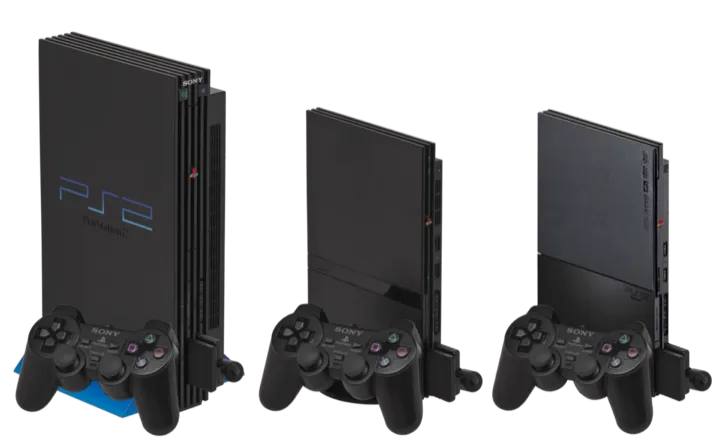
PlayStation 2
The PlayStation 2 transformed gaming into the 21st century with revolutionary graphics processing and DVD functionality. Its combination of hardware power and entertainment utility made it the most successful gaming console ever created, dominating living rooms worldwide for over a decade.
RANKINGTop 10 best-selling games
How it is ranked: Worldwide sales (from the English Wikipedia list)
 楽天
 楽天
 楽天
 楽天
 楽天
 楽天
 楽天
 楽天
 楽天

What is it?
The PlayStation 2, released by Sony Computer Entertainment on March 4, 2000, in Japan and later that year in North America and Europe, represented a quantum leap in gaming power. Its custom-designed Emotion Engine processor and Graphics Synthesizer chip delivered graphics performance exceeding contemporary personal computers. The sleek black rectangular design accommodated both vertical and horizontal orientation. Critically, it featured DVD-ROM media as its primary format, instantly establishing the console as households' central entertainment hub. The system became a DVD player itself, attracting consumer interest beyond traditional gamers. Digital optical output delivered Dolby Digital 5.1 surround sound, marking gaming's first native support for advanced audio formats.
The two-decade lifecycle produced multiple hardware revisions, from the original SCPH-10000 through the SCPH-90000 series. The 2004 SCPH-70000 'slim model' reduced size and weight significantly. Early models included PC card slots, memory card connectivity, and modem ports, though later revisions streamlined I/O functionality. Remarkably, PS2 computing power rivaled professional workstations—research institutions actually repurposed PS2 units as cluster computers for scientific computation.
How it came to be
Following PlayStation's extraordinary success, Sony accelerated development of the next-generation system. The 1999 PlayStation Meeting unveiled the hardware to stunned industry observers, receiving recognition for specs previously considered impossible for consumer hardware. Development partnerships with major publishers like Rockstar Games aimed to showcase 3D gaming's new frontiers. The ¥39,800 launch price matched the original PlayStation, immediately gaining consumer attention. The first day sold 600,000 units, an unprecedented achievement in console history. Adoption of high-performance CPUs initially restricted by export regulations under the Wassenaar Arrangement generated early headlines.
Supply constraints during the launch period meant demand vastly exceeded availability. The combination of unprecedented power and DVD functionality—when DVD adoption itself remained uncertain—positioned the PS2 as a risk worth taking for consumers uncertain about the format's future.
Why it succeeded
The PlayStation 2's breakthrough came from DVD functionality elevating it beyond 'mere game hardware.' In 2000, DVD remained an emerging format with uncertain market penetration. PS2 ownership justified purchase for DVD playback alone, familiarizing households with the emerging standard. Meanwhile, 3D graphics capabilities finally matched what developers dreamed possible, enabling epic games previously impossible. Backward compatibility with original PlayStation software made upgrade paths seamless for existing owners. The resulting 160-million-unit lifetime sales from 2000 through 2012 established PS2 as history's most successful console.
Publishers produced increasingly ambitious titles as development tools matured. DVD's massive storage capacity freed developers from cartridge limitations, enabling full-motion video, orchestral soundtracks, and cinematic presentation that captivated players. Multiple game libraries—everything from casual family entertainment to mature-rated experiences—ensured audience diversity.
Fun facts
PS2 remained in production for over a decade until December 28, 2012—twelve years of continuous sales. Even after discontinuation, new software appeared through 2013, with Final Fantasy XI: Adventurers of Adoulin released March 27, 2013, as the platform's final major game. Multiple hardware revisions provided substantial design evolution. Early models featured network adapters and modem ports, while slim revisions eliminated these components in favor of USB connections. Some enthusiasts even exploited PS2 units as computing clusters, leveraging the hardware's surprising raw processing power.
The platform's longevity extended beyond gaming—film studios, anime distributors, and media companies embraced DVD delivery through PS2 compatibility. Gaming historians recognize PS2 as the inflection point where consoles transitioned from gaming-only devices to multimedia entertainment hubs, a trajectory every subsequent platform followed.
Specs
| CPU | Emotion Engine (294.912 megahertz) |
|---|---|
| GPU | Graphics Synthesizer (147.456 megahertz) |
| Main memory | 32 MB Direct RDRAM |
| Video memory | 4 MB eDRAM |
| Release | Japan: March 4, 2000 |
| Launch price | ¥39,800 (Japan) |
| Units shipped | 160 million worldwide |
Sources
- English and Japanese Wikipedia articles on the PlayStation 2