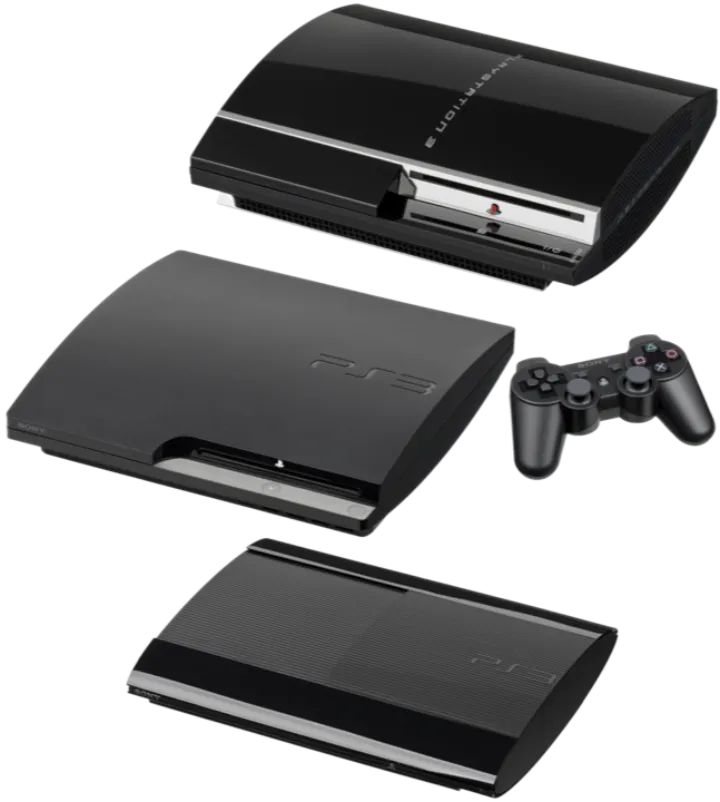
PlayStation 3
The PlayStation 3 introduced the Cell Broadband Engine and Blu-ray technology, establishing the foundation for high-definition gaming. Over its extended lifecycle, PS3 became gaming's second-most successful console, delivering technical power and entertainment versatility that sustained commercial relevance for seven years.
RANKINGTop 10 best-selling games
How it is ranked: Worldwide sales (from the English Wikipedia list)
 楽天
 楽天
 楽天
 楽天
 楽天
 楽天
 楽天
 楽天
 楽天
 楽天

What is it?
The PlayStation 3, released by Sony Interactive Entertainment on November 11, 2006 in Japan, represented gaming's leap into high-definition era. The proprietary Cell Broadband Engine CPU, partnered with NVIDIA's RSX Reality Synthesizer GPU, delivered processing power that theoretically exceeded contemporary consumer computers. The integrated Blu-ray Disc drive established the emerging format as standard gaming media while simultaneously enabling DVD-quality video playback, positioning PS3 as household entertainment center. Full HD 1080p output capability accommodated the accelerating transition toward high-definition television adoption globally. Standard HDMI and hard drive connectivity enabled internet-based online play, downloadable content distribution, and multimedia entertainment functions previously impossible. Early models maintained backward compatibility with PlayStation 2 software, easing consumer transition.
PS3 underwent multiple hardware revisions throughout its lifecycle. Initial models through later generation units represented incremental technical advancement. A slim model introduced in 2009 substantially reduced physical dimensions and weight. Subsequent iterations streamlined I/O connectivity, eliminating early-generation PC card slots and modem ports in favor of simplified architecture. Remarkably, research institutions actually repurposed PS3 units as cluster computers for scientific applications—the Cell processor's parallel computation architecture proved valuable for non-gaming computational tasks.
How it came to be
Following PS2's unprecedented dominance, Sony initiated next-generation console development under intense pressure. The 2005 E3 announcement unveiled revolutionary hardware specifications that stunned industry observers. Initial Spring 2006 release planning extended to November as Blu-ray specifications finalized—the emerging format's adoption proved critical to strategic positioning against competing HD-DVD technology. The Cell processor's extraordinary complexity created substantial developer challenges: the unconventional multi-core architecture differed radically from conventional CPU design, demanding specialized programming expertise. Publisher adoption proceeded cautiously, intimidated by the technical learning curve. High launch pricing (¥49,980 for the 20GB model) presented market accessibility challenges. Production ramping proved deliberately gradual, necessitating careful supply management as demand fluctuated.
Industry skepticism focused on Cell's complexity and high initial cost. Developers recognized the potential but feared investing resources in unfamiliar architecture. Manufacturing improvements and price reductions eventually stabilized the supply chain, enabling broader market penetration.
Why it succeeded
PS3's success paradoxically emerged from initial disadvantages. Early rough launch softened expectations—subsequent years of refinement created positive surprise. Blu-ray's ultimate format victory (HD-DVD's failure by 2008) vindicated the technology gamble. HD television adoption acceleration created demand for hardware capable of displaying true high-definition gaming. The Cell processor's steep learning curve, while deterring early publisher participation, eventually enabled technical advances competitors couldn't match. By 2008-2012, PS3 game catalog expanded dramatically as developers mastered the hardware. The 77 million lifetime units sold and extended post-2012 support (software releases continued into 2013) demonstrated eventual market acceptance despite problematic launch.
Price reductions and improved software library transformed initial skepticism into consumer enthusiasm. By hardware's midlife (2008-2010), superior exclusives and technical capabilities attracted audiences increasingly willing to embrace HD gaming.
Fun facts
Cell Broadband Engine's revolutionary architecture proved simultaneously blessing and curse: the extraordinary processing power enabled technical achievements, yet the unconventional design demanded completely different programming approaches. Early developers struggled; later studios exploiting the architecture achieved performance gains competitors couldn't match. By 2017, all PS3 models completed production—officially fourteen years of unbroken manufacturing. Extended post-discontinuation support through 2013 made PS3 gaming's first platform achieving 10+ years of manufacturer software support. PlayStation Store service closure received planned announcement, generating consumer protest. Sony reversed the decision, maintaining digital storefront access indefinitely.
PS3's legacy transcended gaming—the platform demonstrated consoles could function as primary household entertainment devices. Blu-ray victory established the format's primacy; studios distributed films exclusively on Blu-ray for years. The Cell processor, while never finding other consumer applications, validated heterogeneous computing concepts eventually adopted in modern game development.
Specs
| CPU | Cell Broadband Engine processor |
|---|---|
| GPU | RSX Reality Synthesizer graphics processor |
| Memory | 256MB XDR DRAM and 256MB GDDR3 |
| Total sales | 77 million units worldwide |
Sources
- English and Japanese Wikipedia articles on the PlayStation 3