
The Legend of Zelda: Ocarina of Time
ゼルダの伝説 時のオカリナ
Zelda's transition to three dimensions established new adventure gaming conventions through temporal mechanics and expansive dungeon design. Players alternate between childhood and adulthood, using an enchanted ocarina to manipulate time while solving elaborate environmental puzzles.
What is it?
The Legend of Zelda: Ocarina of Time follows protagonist Link across two distinct life stages—child and adult—within the kingdom of Hyrule. The narrative structure requires players to progress through childhood challenges, then advance to adulthood unlocking adult-exclusive areas and abilities. An enchanted instrument, the Ocarina of Time, enables temporal transitions between both life stages, revealing alternate environmental configurations and puzzle solutions unique to each era. Dungeon progression requires obtaining specific items enabling passage through previously impassable obstacles: bombs for destroying walls, hookshots for traversing gaps, and magical instruments for environmental manipulation.
Gameplay distributes progression across eight major dungeons plus multiple smaller puzzle caverns. Each dungeon contains environmental puzzles integrated with combat encounters, requiring both tactical item selection and physical dexterity. Boss encounters demand pattern recognition and tactical positioning, with each boss presenting distinct attack sequences and vulnerability windows. Link's arsenal expands throughout the adventure: shields and swords for melee combat, projectile weapons for ranged engagement, magical items for environmental interaction, and transportation tools enabling expanded map traversal.
How it plays
The transition from overhead third-person perspective to dynamic camera-controlled perspective fundamentally altered gameplay physics and spatial awareness. Link's combat emphasizes timing and positioning: charging sword attacks requires patience waiting for optimal striking moments, while dodge-rolling avoids incoming attacks through positional adjustment. Puzzle design integrates physical laws and object properties: water levels controlled through mechanical devices, light refraction solving shadow-based challenges, and sequential operations completing multi-stage puzzles.
The ocarina's musical mechanics provide unique gameplay differentiation: players select from learned songs triggering environment-specific effects. Certain melodies summon characters, manipulate environmental elements like time itself, or reveal hidden passages. This music-gameplay integration creates thematic cohesion while offering novel puzzle-solving mechanics. Environmental exploration reveals alternative routes, hidden grottos, and optional side-quests enriching the core narrative without mandatory inclusion.
Why it sold / trivia
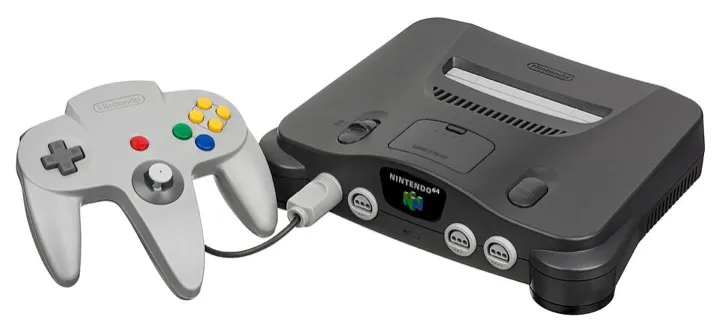
The Legend of Zelda: Ocarina of Time revolutionized adventure gaming through sophisticated 3D dungeon design and innovative puzzle integration. The game achieved a Metacritic score of 99 out of 100 based on forty-four reviews, representing near-universal critical acclaim and ranking among gaming's most acclaimed titles. Sales reached 7.60 million copies, establishing it among the Nintendo 64's top sellers alongside Super Mario 64.
The game's critical influence extended far beyond commercial success: numerous action-adventure games directly replicated its dungeon structure, puzzle philosophy, and adventure pacing. The Z-targeting lock-on system, enabling fixed enemy focus during three-dimensional combat, became an industry standard across subsequent action games. Nintendo's 2011 release of a Nintendo 3DS remake reintroduced the game to portable gaming audiences, cumulatively extending the franchise's reach across multiple console generations. Retrospective gaming analysis consistently recognizes Ocarina of Time as foundational to contemporary adventure game design, frequently appearing on greatest-games-of-all-time rankings from industry publications and gaming communities alike.
Sources
- Best-seller list (English Wikipedia)
- The Legend of Zelda: Ocarina of Time (English Wikipedia)
- ゼルダの伝説 時のオカリナ (Japanese Wikipedia)
How it is ranked: Worldwide sales (from the English Wikipedia list)
 楽天
 楽天
 楽天
 楽天
 Pokémon Stadium