
Super Mario Galaxy
スーパーマリオギャラクシー
A 3D action-platformer set across spherical planetoids. Motion controls let Mario spin attack and manipulate gravity as he explores multiple worlds.
What is it?
Super Mario Galaxy departs from traditional 3D Mario games by setting the adventure across multiple small planets rather than one cohesive world. Each planet is a sphere, and Mario walks on its surface with gravity always pulling toward the planet's center. This radically reimagines 3D platforming: a path that appears vertical on one planet becomes horizontal on the next as gravity rotates. Mario's goal remains familiar—rescue Princess Peach—but the spatial logic feels alien, requiring players to rotate their perspective constantly.
Collecting Power Stars serves as the progression metric, with each planet housing multiple stars behind different challenges, secret areas, or boss battles. The cosmic setting allows Nintendo to abandon environmental logic; gravity can reverse, platforms can defy physics, and the universe itself becomes a playground.
How it plays
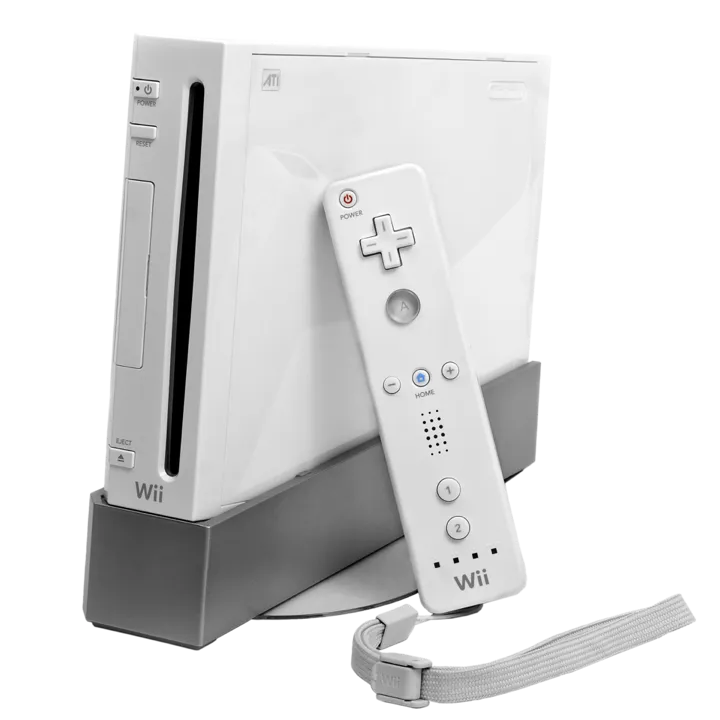
Shaking the Wii Remote triggers Mario's 'Spin Attack,' a dash move that recovers momentum, breaks objects, and stuns enemies. This motion input feels natural for a spin, and the controller shake feedback provides satisfying tactile response. Gravity's manipulation—entering a planet's influence pulls Mario toward its surface—makes disorientation inevitable, but intentional. Understanding each planet's gravity layout is essential.
Difficulty ramps significantly from entry-level stages to Power Star hunts. Some planets serve as relaxing explorations; others demand pixel-perfect platforming. Boss battles introduce complex patterns where learning attack sequences and dodge windows matters intensely. The game respects player skill variation through optional challenges, letting casual players finish the main narrative while speedrunners and completionists discover hard mode content.
Why it sold
Galaxy launched alongside the Wii in November 2007 and earned universal critical praise as a 'masterpiece.' The gravity-shifting gameplay proved genuinely innovative, not a gimmick. Motion controls felt integral rather than shoehorned in. Reviewers praised how effectively the game tutorialized each new mechanic, introducing gravity shifts gradually so players adapted naturally.
The mysterious green 'Luma' creatures—star-shaped companions that appear throughout—added narrative intrigue and emotional stakes. Galaxy's success spawned the sequel, establishing a new Mario tradition. Nintendo established that 3D Mario could thrive with radical environmental designs, influencing future 3D platformer architecture.
Sources
- Best-seller list (English Wikipedia)
- Super Mario Galaxy (English Wikipedia)
- スーパーマリオギャラクシー (Japanese Wikipedia)
How it is ranked: Worldwide sales (from the English Wikipedia list)
 楽天
 楽天
 Wii Sports Resort
 楽天
 楽天