Xbox One
Release date: September 4, 2014 (Japan), November 22, 2013 (North America)
Microsoft's eighth-generation home console launched in North America in November 2013, reaching Japan in September 2014. Built around an AMD Jaguar processor with sophisticated operating system architecture, it integrated gaming with entertainment and online services. Xbox Game Pass, a subscription service offering hundreds of games, became central to the platform's value proposition.
RANKINGTop 10 best-selling games
How it is ranked: Worldwide sales (from the English Wikipedia list)
Grand Theft Auto VForza Horizon 4PUBG: BattlegroundsCall of Duty: Black Ops IIICall of Duty: WWIICall of Duty: Advanced WarfareHalo 5: GuardiansCall of Duty: Infinite WarfareThe Witcher 3: Wild HuntDead Rising 3What is it?
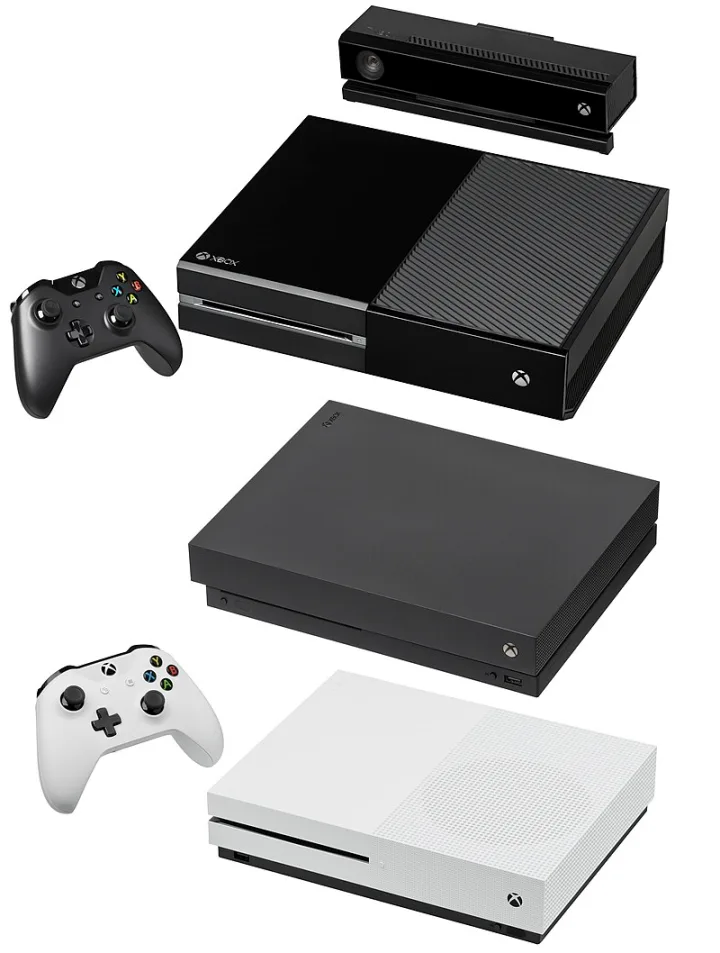
The Xbox One represented Microsoft's vision for an all-in-one entertainment platform combining gaming, television, movies, and music services. The black box emphasized multimedia connectivity, featuring a Blu-ray player, streaming apps, and integration with cable television through HDMI input. The bundled Kinect sensor provided gesture and voice recognition, allowing control without traditional controllers.
Early promotional emphasis on entertainment features initially alienated hardcore gamers worried about sacrificing gaming performance. Following backlash, Microsoft refocused on gaming while retaining media capabilities. The console's operating system proved unconventional, running three separate instances of Windows simultaneously, creating a complex architecture that enabled rapid app switching. Later revisions eliminated Kinect bundling, refining the console toward pure gaming focus.
Why it was made
Microsoft designed Xbox One as successor to the successful Xbox 360, aiming to continue dominance in Western markets. The enhanced hardware promised dramatically improved graphics and processing power compared to the previous generation. Rather than simply iterating, Microsoft positioned Xbox One as an entertainment hub appealing to consumers seeking multimedia solutions, not just gaming platforms.
The console reached Japan nine months after North American launch, reflecting manufacturing ramp-up challenges and localization efforts. Performance fluctuations in early months led to supply constraints, though by 2014 adequate inventory existed. Microsoft's focus on online services and Game Pass proved transformative, offering unprecedented value compared to competitors' offerings.
Why it was a hit
Xbox One found success through strong exclusive franchises and aggressive online service expansion. Halo, Forza, Gears of War, and exclusive third-party partnerships drove console sales in North America and Europe. Xbox Game Pass became revolutionary, providing hundreds of games for monthly subscription fees—dramatically disrupting traditional game distribution models.
Powerful hardware enabled stunning graphics as developers mastered the generation's late-cycle capabilities. Early struggles gave way to growing momentum as Microsoft invested in first-party studios and promised exclusive content. The online infrastructure proved reliable and feature-rich, with backwards compatibility eventually allowing hundreds of original Xbox and Xbox 360 games to play natively.
Good to know
Xbox One faced fierce competition from PlayStation 4, which dominated global sales especially outside North America. While the console succeeded commercially with 58 million units sold, it trailed PlayStation 4's significantly higher total. Performance disparities favored PlayStation 4 in many multiplayer titles, though single-player experiences remained comparable.
In Japan, Xbox One struggled against Nintendo Switch and PlayStation 4, selling approximately 2.4 million units. This regional weakness forced Microsoft to rethink global strategies. The console remained active until November 2020 when Xbox Series X/S launched, though backwards compatibility ensured existing libraries remained playable on next-generation hardware.
Specs
| CPU | AMD Jaguar 8-core @ 1.75 GHz |
|---|---|
| GPU | AMD GCN @ 12 compute units |
| RAM | 8 GB DDR3 |
| Storage | 500GB or 1TB hard drive |
| Release date | November 22, 2013 (North America) / September 4, 2014 (Japan) |
| Launch price | Varies by model |
Sources
- English and Japanese Wikipedia articles on the Xbox One