Dreamcast
Release date: November 27, 1998 (Japan)
In late 1998, Sega released the Dreamcast as the first sixth-generation home video game console. It was the successor to the Sega Saturn and arrived with built-in internet connectivity at a time when online gaming was still emerging. The Dreamcast showed strong technical promise but struggled with software supply, and Sega withdrew from hardware manufacturing in 2001, giving the system a lifespan of roughly three years.
RANKINGTop 10 best-selling games
How it is ranked: Worldwide sales (from the English Wikipedia list)
Sonic AdventureShenmueResident Evil – Code: VeronicaNFL 2KCrazy TaxiNFL 2K1Ready 2 Rumble BoxingTomb Raider: The Last RevelationNBA 2K2Crazy Taxi 2What is it?
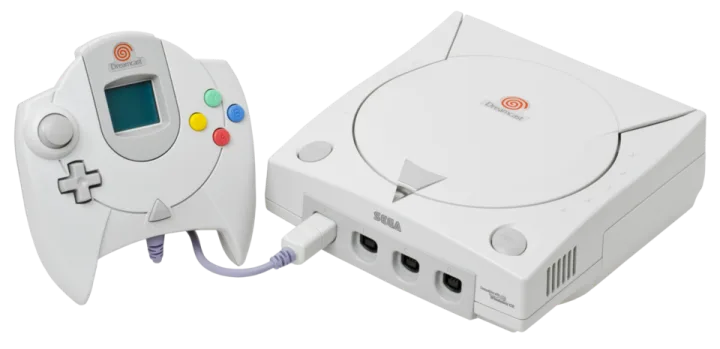
The Dreamcast is a 128-bit home console built by Sega around a Hitachi SH-4 processor paired with PowerVR2 graphics hardware developed with VideoLogic. The white-finished case became iconic, and the system shipped with a modem built into the console for dial-up internet play. Games arrived on a proprietary disc format called GD-ROM, which held up to 1 gigabyte of data, allowing for full-motion video and other richly detailed content. The controller featured a small LCD screen called a Visual Memory Unit (VMU) that could be inserted into an expansion slot, letting players view game data or run minigames while away from the console.
The Dreamcast brought online multiplayer to home gaming at a scale consumers had rarely seen. Its built-in networking, combined with games like Phantasy Star Online and Shenmue, foreshadowed the internet-connected gaming future that would become standard on later systems. The console also introduced Sega Net, an online service that allowed players to connect directly to the internet and to Sega's servers, enabling everything from voice chat to game updates downloaded over the connection.
Why it was made and how it fared
After the commercial and critical struggles of the Sega Saturn, Sega moved quickly to design its successor. The company faced technical setbacks during development; delays in producing the PowerVR2 graphics chip pushed back both the console launch and software releases. Sega announced the Dreamcast in May 1998 and began manufacturing in autumn, aiming for a holiday release to compete during the year-end shopping season. Despite high anticipation and aggressive marketing, the Dreamcast faced an uphill battle. The launch lineup suffered from delays, and many planned killer apps arrived too late.
The Dreamcast succeeded with early adopters and enthusiasts hungry for 3D gaming and online experiences. Sonic Adventure, released alongside the console in Japan, became a showcase title that highlighted what the hardware could do. In North America, the console attracted players who had grown tired of waiting for the PlayStation 2, and the mid-range pricing made it accessible to younger gamers. However, Sony's PlayStation 2 was announced for a 2000 debut, and publishers began to shift their development focus. Sega's attempts to reignite sales—including a price cut to under ¥20,000 in mid-1999—came with heavy losses per unit sold, ultimately proving unsustainable for a company already under financial strain.
Its legacy and impact
In January 2001, Sega announced it was exiting the hardware business and would shift to publishing games for other platforms. The company made a one-time loss of roughly 81 billion yen to clear Dreamcast inventory. By autumn of that year, the console and its game library were nearly impossible to find at retail. Yet the Dreamcast's legacy is outsized relative to its sales.
The system is remembered as ahead of its time for championing online gaming and digital distribution. Modern emulation and fan-maintained servers have kept the console alive in collector and enthusiast circles, and many Dreamcast games have been ported or re-released on later platforms. The Visual Memory Unit turned everyday gaming into a collectible hobby, with players raising digital pets on their memory cards. Fan loyalty remained strong even after the console's commercial decline, and underground online communities kept Dreamcast servers running years after Sega pulled support.
Specs
| CPU | Hitachi SH-4 (200 MHz) |
|---|---|
| Release date | November 27, 1998 (Japan) |
| Launch price | ¥29,800 (Japan) |
| Units sold | approximately 10 million units |
Sources
- English and Japanese Wikipedia articles on the Dreamcast