Nintendo GameCube
Release date: September 14, 2001 (Japan), November 18, 2001 (North America), May 3, 2002 (Europe)
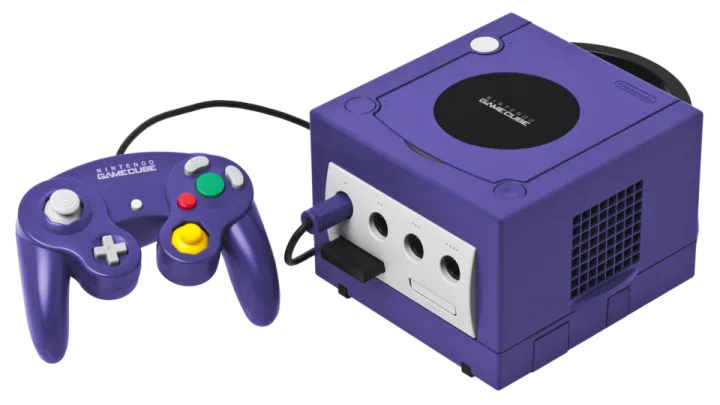
Nintendo's home console released on September 14, 2001, in Japan and November 18, 2001, in North America. With its distinctive cube-shaped design and use of proprietary optical discs, the GameCube brought high-quality 3D graphics and stable performance to the living room. It became home to some of the greatest games in Nintendo's catalog.
RANKINGTop 10 best-selling games
How it is ranked: Worldwide sales (from Wikipedia's list of best-selling GameCube games)
Super Smash Bros. MeleeMario Kart: Double Dash!!Super Mario SunshineThe Legend of Zelda: The Wind WakerLuigi's MansionMetroid PrimeAnimal CrossingMario Party 4Pokémon ColosseumMario Party 5What is it?
The GameCube is a home console built around a distinctive cube-shaped case. Available in deep purple or black, its compact footprint made it stand out from competitors designed to sprawl across entertainment centers. At its heart sat a PowerPC processor from IBM, paired with graphics hardware co-developed with ArtX. Game discs were proprietary optical media holding roughly 1.5 gigabytes—more than a CD-ROM but smaller than a full-sized DVD.
The included controller broke convention, splitting controls between left and right hands with an A button as the central hub. Analog triggers provided pressure-sensitive input for subtle actions in racing and sports titles. The system accommodated four controllers for multiplayer sessions and included a memory card slot for saving progress. Later hardware revisions added built-in storage, reducing dependence on memory cards.
Why it was made
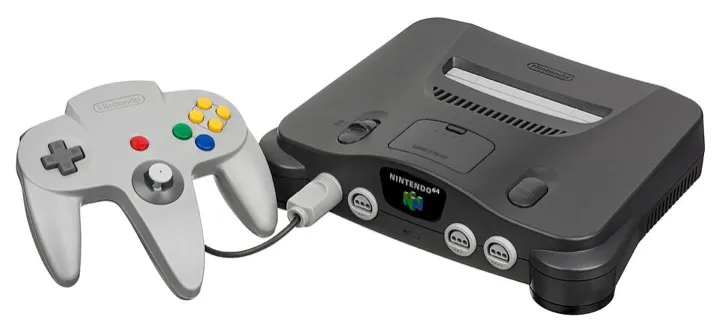
Nintendo needed a successor to the Nintendo 64. The 64's cartridge format had limited storage, forcing developers to compromise on textures, music and cinematics. Meanwhile, the original PlayStation had demonstrated the appeal of a disc-based console, though early CD readers were slow. Nintendo's solution was to partner with ArtX to design custom graphics hardware and work with IBM to create a powerful CPU, then team with Panasonic on a faster disc drive.
The project, codenamed Dolphin, launched in Japan in September 2001 and reached North America that November. Nintendo positioned the GameCube as a machine built for real-world game development, prioritizing actual performance over raw specifications on paper. The company avoided the specs wars that had dominated the previous generation, instead focusing on making a system that game creators could work with reliably.
Why it was a hit
The GameCube's greatest asset was its game collection. Super Smash Bros. Melee reached millions of copies sold and became one of the console's defining titles. 3D adventures including the acclaimed Sunshine platformer, the Wind Waker's ocean-sailing epic, and the first-person Prime game proved Nintendo's franchises adapted brilliantly to three dimensions. Mario Kart's two-rider mechanic reinvented the racing genre and drove the system's popularity.
The system itself aided this success. Its distinctive shape and built-in handle gave it personality and portability unusual for a home console. Nintendo's relentless first-party output ensured a steady stream of high-quality games. While the PlayStation 2 achieved higher overall sales and the original Xbox competed fiercely, the GameCube cultivated a passionate user base, particularly in North America and among players seeking Nintendo's exclusive franchises.
Good to know
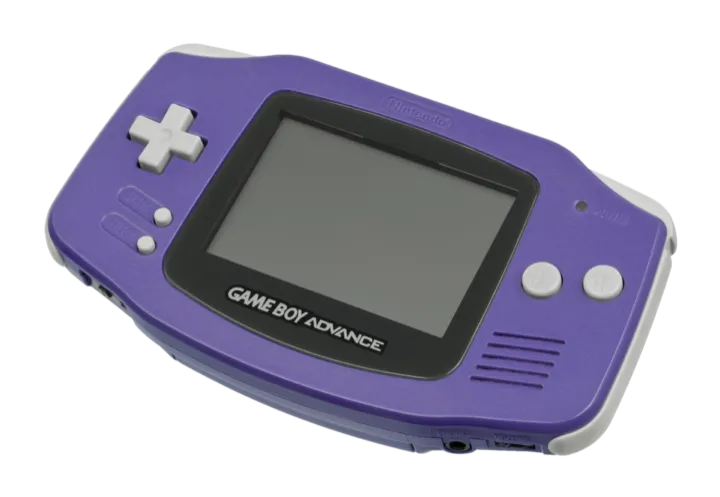
The GameCube's discs came in different sizes depending on region: Japan's were smaller and more compact, while North America and Europe received full-sized DVD-format cases. The system also supported a Game Boy Advance connection cable, letting players link to handheld games and even transfer data. Some titles took full advantage of this, like Pokémon Colosseum and Pokémon XD, which allowed you to migrate creatures from your Game Boy game.
In 2002, the GameCube's design won the Good Design Award in Japan, recognizing it as an outstanding consumer product. Though the console was discontinued in 2007, its controllers remain sought-after and are still used today, particularly in competitive play for Super Smash Bros. Melee. The system's influence on game design and the depth of its library ensure it remains celebrated among collectors and enthusiasts more than two decades later.
Specs
| CPU | IBM PowerPC Gekko, 485 MHz |
|---|---|
| Release date | September 14, 2001 (Japan) / November 18, 2001 (North America) |
| Launch price | ¥25,000 (Japan) |
| Total units sold | 21.74 million |
Sources
- English and Japanese Wikipedia articles on the Nintendo GameCube