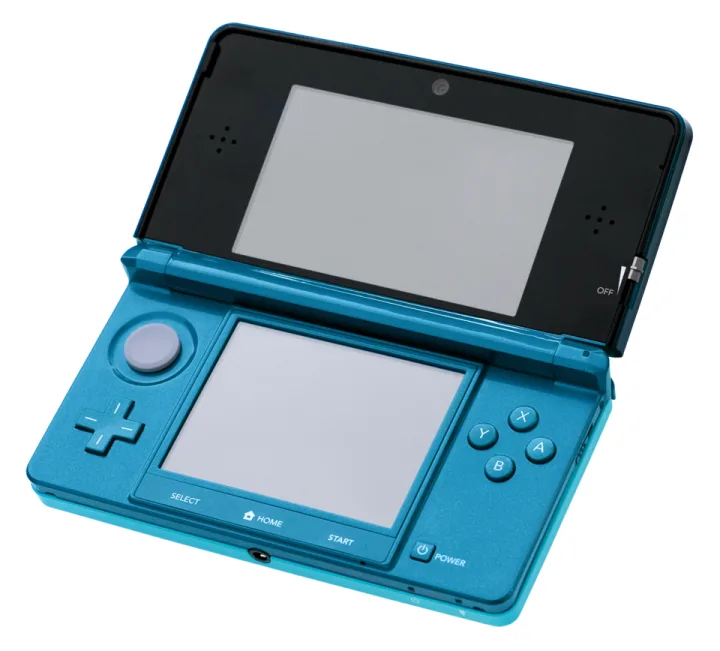
 Mario Kart 7
マリオカート7
Arriving as the year-end system-seller for the struggling 3DS in late 2011, Mario Kart 7 transformed the console's fortunes overnight. This racing game introduced hang-gliding and underwater racing segments that expanded track design possibilities. As the best-selling Mario Kart game on any Nintendo handheld, it became the essential 3DS title.
What is it?
Players race as Mario franchise characters in colorful, themed courses spanning a variety of environments. The core gameplay remains true to the series formula: drive through checkpoints while collecting power-ups to gain advantages or hinder opponents. Mario Kart 7 introduced two transformative mechanics. Hang-gliders allow racers to glide through portions of tracks, adding vertical movement and shortcut opportunities. Underwater segments feature propeller-based movement, completely changing how players navigate flooded course sections.
The game includes thirty-two tracks total, with half being entirely new creations and half reimagined classics from previous Mario Kart games. Seventeen playable characters each control differently, while kart customization lets players mix and match bodies, tires, and gliders to match their preferred racing style. Online play supports up to eight racers, with both grand prix and battle modes available. Local wireless multiplayer allows for head-to-head competition between nearby systems.
How it plays
The innovative hang-gliding and underwater sections require different driving approaches than traditional track segments. Gliding sections reward precise positioning to maximize flight distance and catch air currents for speed boosts. Underwater driving changes kart handling characteristics and allows access to otherwise unreachable sections. These varied mechanics prevent the experience from feeling repetitive across the many courses.
The gyro sensor integration allows tilt-based steering, with many players preferring this more intuitive approach to button controls. Item selection strategy becomes crucial at higher difficulties, where knowing when to deploy defensive items versus offensive attacks determines match outcomes. Drifting remains essential for competitive racing, with tight cornering and boost timing separating casual players from dedicated racers.
Why it sold / trivia
The 3DS faced mounting sales pressure through its first year due to high launch price and weak software lineup. Nintendo needed a killer app immediately, and Mario Kart 7 delivered at precisely the right moment. Launching as a holiday-season flagship title alongside simultaneous mainline releases like Super Mario 3D Land, the game became one of the system's biggest early hits.
Retro Studios, the developers behind Donkey Kong Country Returns, joined the small initial team after finishing that project, bringing invaluable experience to course design and physics implementation. In Japan it became the first 3DS game to pass two million copies, reaching that mark in just under two months. By the end of its lifecycle, Mario Kart 7 achieved 18.99 million worldwide sales, standing as the highest-selling 3DS software title and demonstrating that proven franchises remain powerful drivers of hardware adoption even under challenging market conditions.
Sources
How it is ranked: Worldwide sales (from the English Wikipedia list)
MORENintendo 3DS: more best sellers
Top 10 ›Pokémon X and YPokémon Sun and MoonPokémon Omega Ruby and Alpha SapphireNew Super Mario Bros. 2Animal Crossing: New Leaf